Data assessment
Map the sources, owners, definitions and quality issues that determine whether reporting can be trusted.

Data engineering & analytics
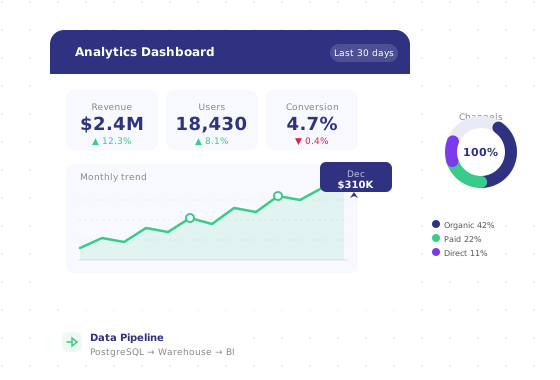
Data pipelines, analytical models and reporting that help teams work from consistent information instead of disconnected extracts.
Discuss your requirementsWhen this can help
Potential scope
The combination depends on your requirements; scope is agreed before delivery.
Map the sources, owners, definitions and quality issues that determine whether reporting can be trusted.
Move and transform data with explicit validation, refresh requirements and handling for incomplete or failed inputs.
Organise data around agreed business definitions, with traceability back to source systems.
Build reporting around the decisions people need to make, with appropriate filtering, access and explanations of each metric.
Tangible outputs
Specify the deliverables and acceptance criteria that matter for your engagement.
Data access, source quality, refresh frequency, ownership and retention requirements all affect the solution. A dashboard cannot resolve inconsistent underlying data on its own.
Share the decisions you need to support, the reports you use today and where the underlying information lives. Avoid sending sensitive datasets in an initial enquiry; access can be arranged separately.
More about the delivery approachUseful to know
Yes. We can start with how a report is produced, where its numbers come from and what users need to change. The work may involve the reporting layer, underlying data flows or both.
Relevant tools include Python, SQL, PostgreSQL and Power BI. Tool choices should fit your existing environment, operating needs and internal skills.
Access, data handling and any applicable organisational requirements need to be agreed before data is shared or processed. Please describe the requirement without sending sensitive records.
A clear place to start
Tell us what you want to improve. We’ll discuss the context and a practical next step.